Today, Straight4 Studios and Giants Software released Project Motor Racing Update 2.2, delivering a major first-stage rework of the LMDh class.
Project Motor Racing Update 2.2 focuses heavily on improving the core driving experience, with changes spanning vehicle physics, tyres, aerodynamics, AI, online play, career mode, audio, and the user interface. Alongside this, the developers have added extensive stability improvements, bug fixes, and continued development of VR and Triple Screen support.
The LMDh overhaul is the headline addition, laying the technical foundation for further development of the class in future updates. Internal combustion engine behavior, Motor Generator Unit regeneration, brake-by-wire functionality, power delivery, aerodynamics, tyre behavior, chassis dynamics, suspension, center of gravity, vehicle inertias, and setup limits have all received major revisions.
The ICE simulation now features improved inertia, throttle response, engine braking, and steady-throttle behavior, while major oscillations during MGU power deployment have also been addressed. Power delivery has been revised to respect real-world Balance of Performance limitations throughout the rev range, with the system designed to apply those restrictions more smoothly.
Hybrid braking has also been substantially revised, with ABS assist now functioning in both Safe Regen and Full Regen modes at any level of MGU regeneration. Brake-by-wire behavior has been improved so that brake balance dynamically adapts as regeneration, vehicle speed, aerodynamic downforce, and brake bias change, while MGU regeneration now responds to both speed and lateral G forces to reduce unwanted axle lockups and increase overall stability.
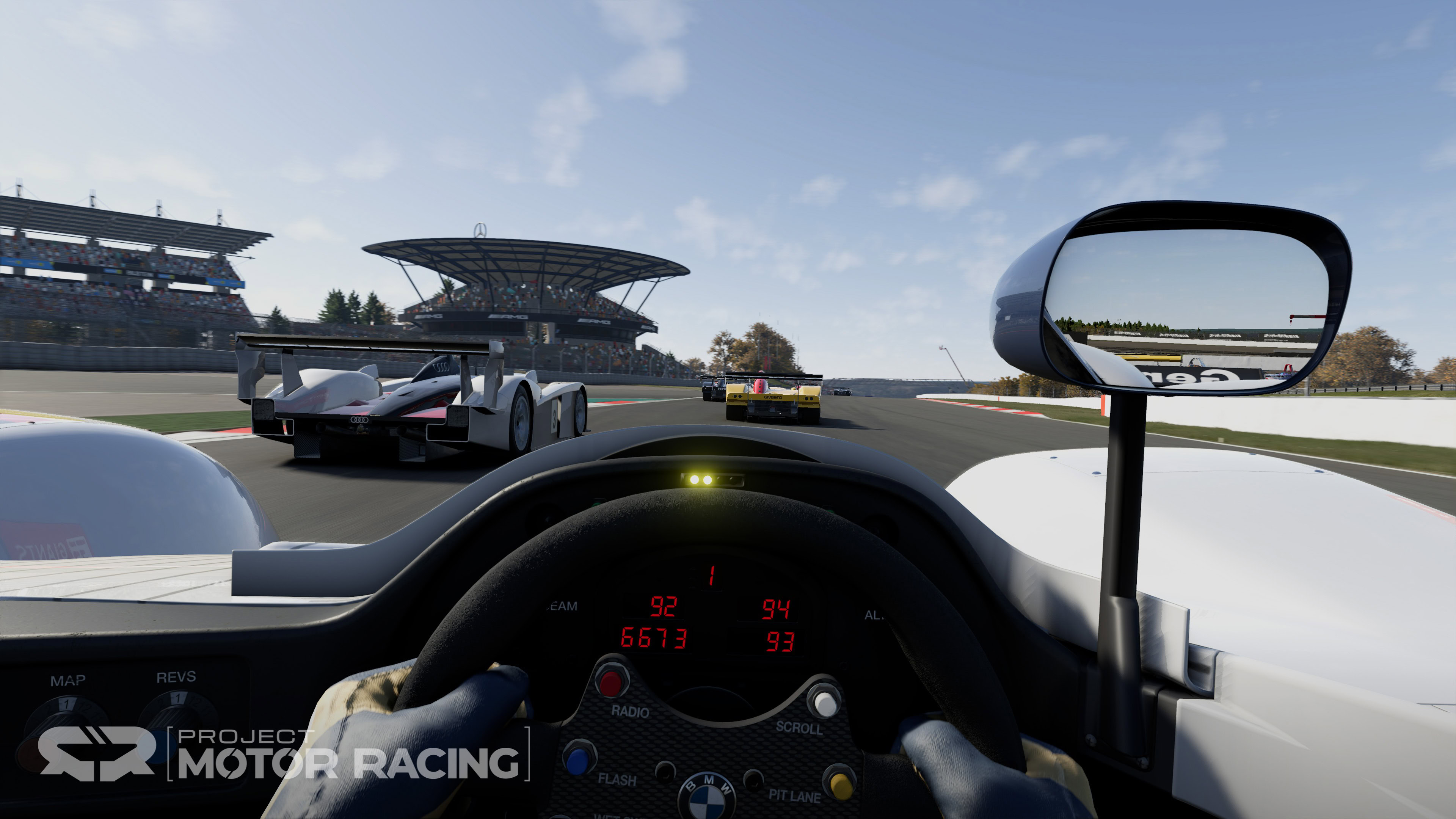

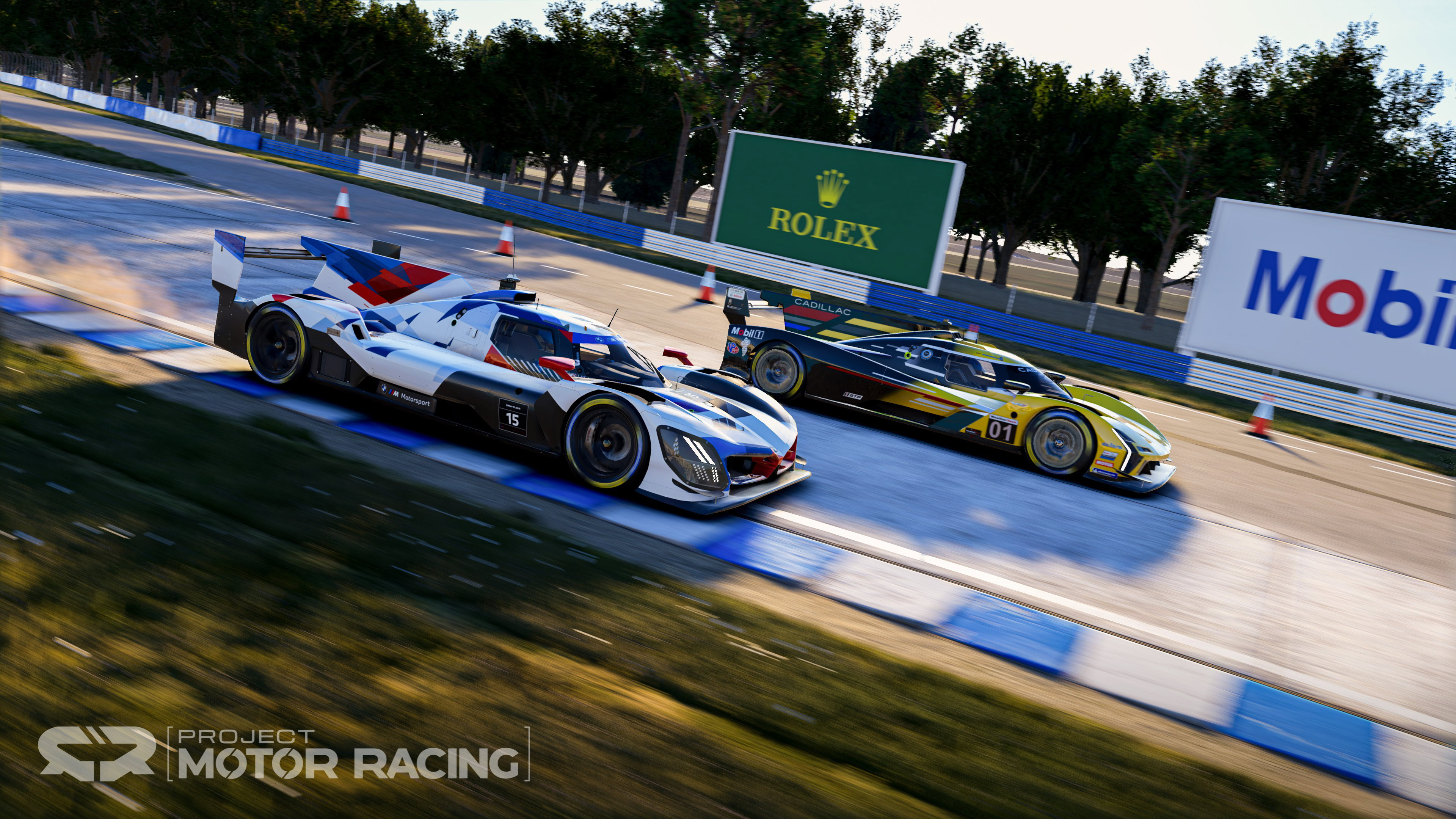
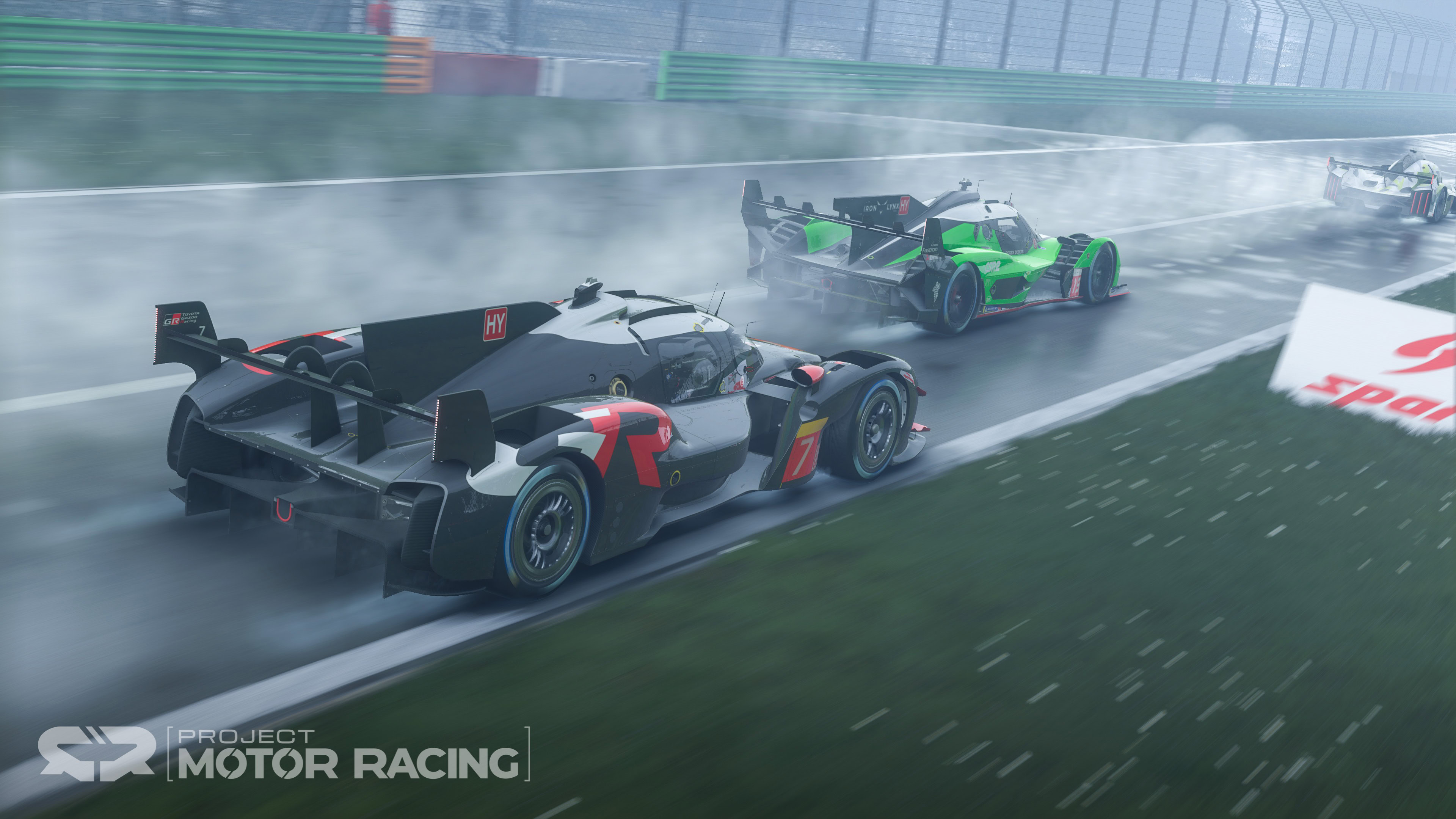
Project Motor Racing Update 2.2 also introduces the first iteration of a new LMDh tyre model featuring three compounds, with differences focused primarily on internal heat generation and pressure behavior rather than large variations in outright grip. The goal is to make compound selection more dependent on ambient and track temperatures, with further development of the tyre system planned for future updates.
Aerodynamics have also received a new foundation, introducing greater pitch sensitivity alongside support for the 4:1 aerodynamic efficiency limitation, low ride-height stalling, and the influence of the cars’ vertical fins under yaw. These changes are intended to produce a more dynamic aerodynamic platform where the car’s movement plays a greater role in overall performance.
The chassis and suspension systems have also been revised through improvements to the center of gravity, vehicle inertias, suspension geometry, and setup limits. The developers describe these changes as the first step in a broader approach that will eventually introduce more individualized behavior for each LMDh and LMH car.
Players should also be aware that existing setups remain compatible with Project Motor Racing Update 2.2, but their handling and performance may change considerably following the physics overhaul. The developers recommend starting with the new default setups or using updated setups available through ModHub.
Meanwhile, VR and Triple Screen support have moved from their experimental Alpha phase to Beta. PC players no longer need command-line parameters to enable either feature, as both options are now available directly through the in-game settings menu, with continued optimization and stability improvements planned throughout the Beta period.
The GT3 class has also received a broad selection of fixes and handling improvements, including corrected tyre temperature behavior while stationary, fixes for duplicate reverse gears, improved slick and wet tyre grip, revised wet-weather behavior, better tyre heat management, and improved stability under throttle. AI opponents have received improvements to pit strategy, overtaking, blue and yellow flag behavior, qualifying stints, and performance at San Marino and Mount Panorama.
Online improvements include new filters for displaying joinable lobbies, disqualifications for players who jump-start and collide with another driver, and several Factory Driver fixes and additions. Gameplay, HUD, UI, audio, career mode, vehicle visuals, and environmental details have also received numerous smaller improvements throughout the Project Motor Racing Update 2.2.
The LMDh rework in Project Motor Racing Update 2.2 is only the first phase of the wider overhaul, with further work planned for ICE power limitations, turbo boost, throttle control, fuel consumption, energy management, ICE and MGU deployment, tyre compounds, aerodynamics, chassis behavior, and car-specific physics. Future updates are also expected to introduce increasingly individualized models for the various LMDh and LMH cars as development continues.
For more information on previous Project Motor Racing updates and other racing simulators, like Forza Horizon 6, iRacing, and Screamer, be sure to check back to Simulation Daily.