Today, Gaijin Entertainment released new information for the next update in its hit, free-to-play MMO military title, War Thunder: Heavy Cavalry.
The War Thunder: Heavy Cavalry update is set to introduce a significant overhaul of missile and guided-weapon mechanics, featuring more realistic physics simulations, revised flight models, and new engine behaviors to improve authenticity and gameplay performance.
A key feature is a new system that simulates how atmospheric pressure affects rocket engine thrust. Before, missile rocket motors produced the same thrust at any altitude. After the update, thrust will increase as atmospheric pressure drops, so missiles will perform better at higher altitudes.
The first weapons to receive this new mechanic are the AIM-54 Phoenix missile variants. This system will eventually be expanded to all missile types as flight models continue to be refined.
The AIM-54 family has received major flight model updates based on player feedback and new performance data, including better thrust at altitude, more maneuverability, higher maximum G-loads, and improved short-range performance. The AIM-54A now has a maximum G-load of 22G, up from 17G. The AIM-54C reaches 25G, and the maximum trim angle of attack has doubled from 12.5 to 25 degrees, allowing Phoenix missiles to turn faster and perform better at close range.

War Thunder: Heavy Cavalry also introduces improvements to missiles powered by ramjet and turbojet engines. While the new Kh-31 arrives with its ramjet engine already modeled, several existing weapons, like the AGM-84 and Kh-59M, will receive upgraded engine simulations.
After the update, fuel consumption and thrust will change based on flight profile, meaning flying faster and higher will use less fuel, though engine thrust will also drop as altitude and speed go up. The overall goal of this change is to better match real-world missile performance.
War Thunder: Heavy Cavalry expands advanced engine activation mechanics first seen with the I-DERBY ER missile. The new ALARM anti-radiation missile uses a two-stage propulsion system, firing once at launch and again later in flight.
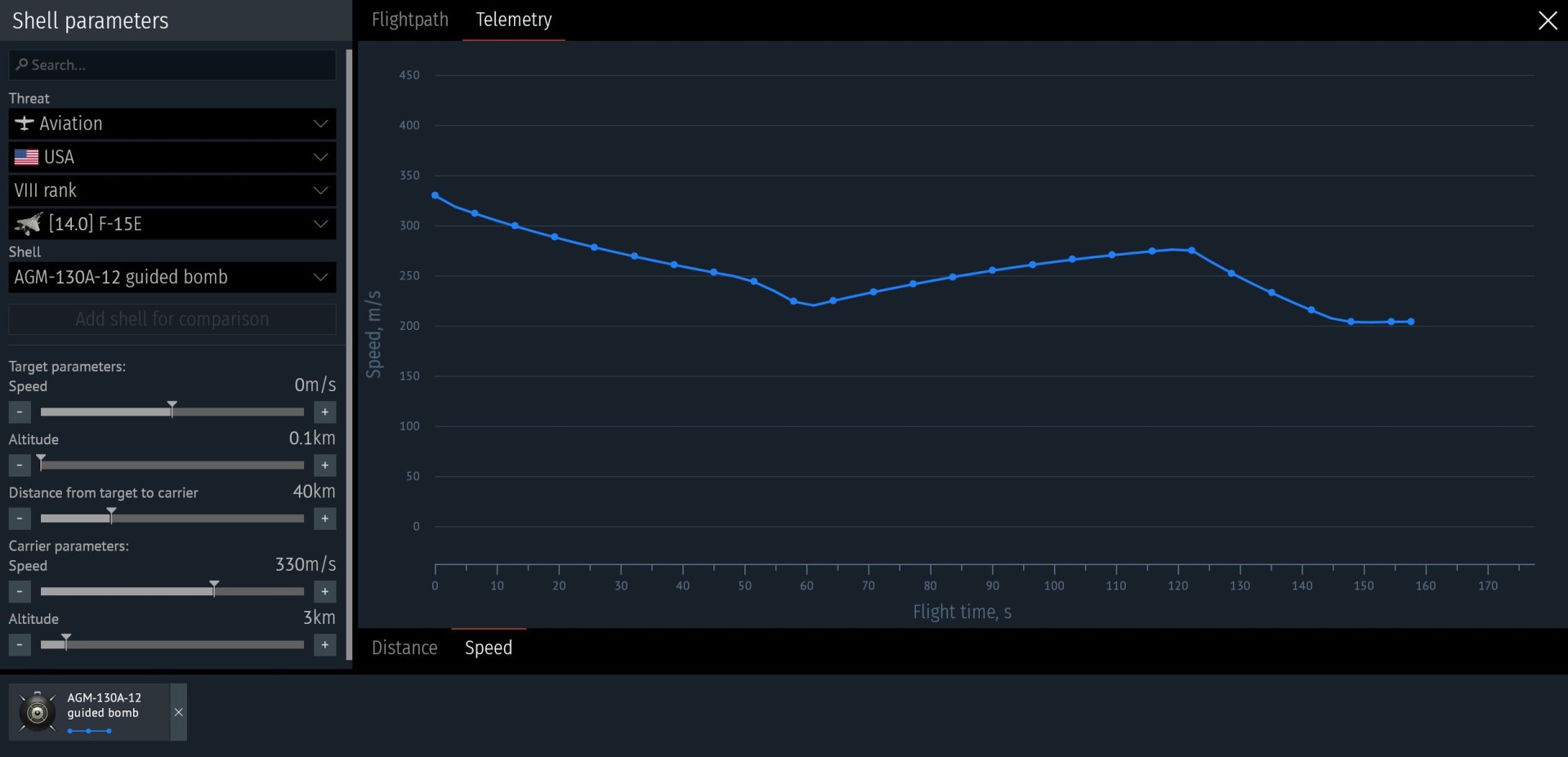
In real life, the ALARM can deploy a parachute and loiter before reigniting its motor. In-game, its second pulse will extend range and boost terminal attack speed. The update also introduces delayed engine starts for the PGM-500, PGM-2000, and AGM-130A-12 guided bombs, which will now activate their engines later in flight, significantly increasing their effective range.
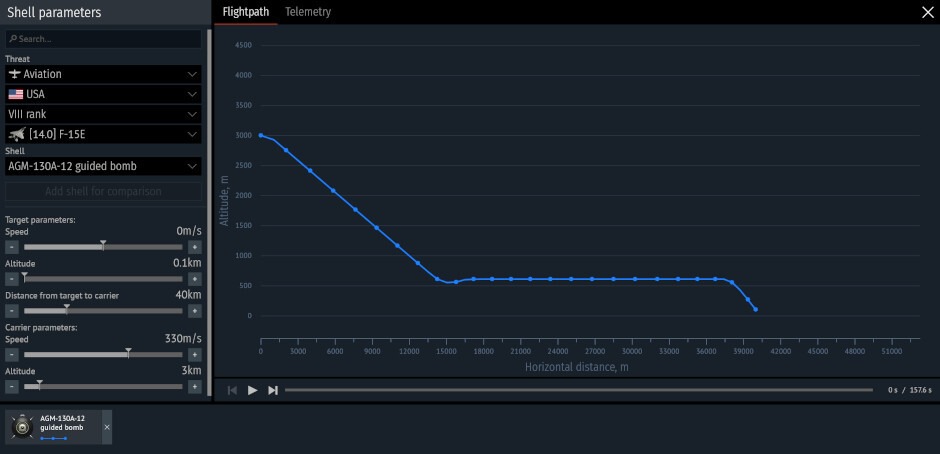
Several missiles and guided bombs will get a new altitude-hold feature. Instead of climbing and diving, these weapons will keep a steady cruising altitude for most of their flight, making them harder to intercept. Weapons receiving altitude-hold functionality include the AGM-130A-12, PGM-500, PGM-2000, AJ.168, LMUR, CM-502KG, and SPIKE-ER.
Helicopter-launched weapons will not receive man-in-the-loop guidance in War Thunder: Heavy Cavalry, though support is planned for the next major update. Gaijin Entertainment also provided a look into the future past this update, as they teased they’re preparing another major advancement in missile simulation: dynamic lift coefficients based on Mach number.
Under the new system, lift increases at subsonic speeds, drops sharply in the transonic region, and gradually decreases at supersonic speeds. The AIM-7 Sparrow and R-27 missile families will be the first to use this feature, and refinements to drag, thrust, and maneuverability are being made using real-world data, with updated flight models coming after Heavy Cavalry.
Future updates will continue to introduce new physics systems while revising older missiles, bombs, and guided munitions, using player reports and newly available technical information, with the goal of creating more realistic, varied, and authentic missile performance throughout the entire arsenal.
War Thunder is currently available on PC (Steam), PS5, PS4, Xbox Series X|S, and Xbox One as a free-to-play title, though add-ons are available for an extra cost. For more info on this and other military sims, be sure to check back to Simulation Daily for updates.