Dassault Rafale for MSFS 2024 Gets New Screenshots and Development Update

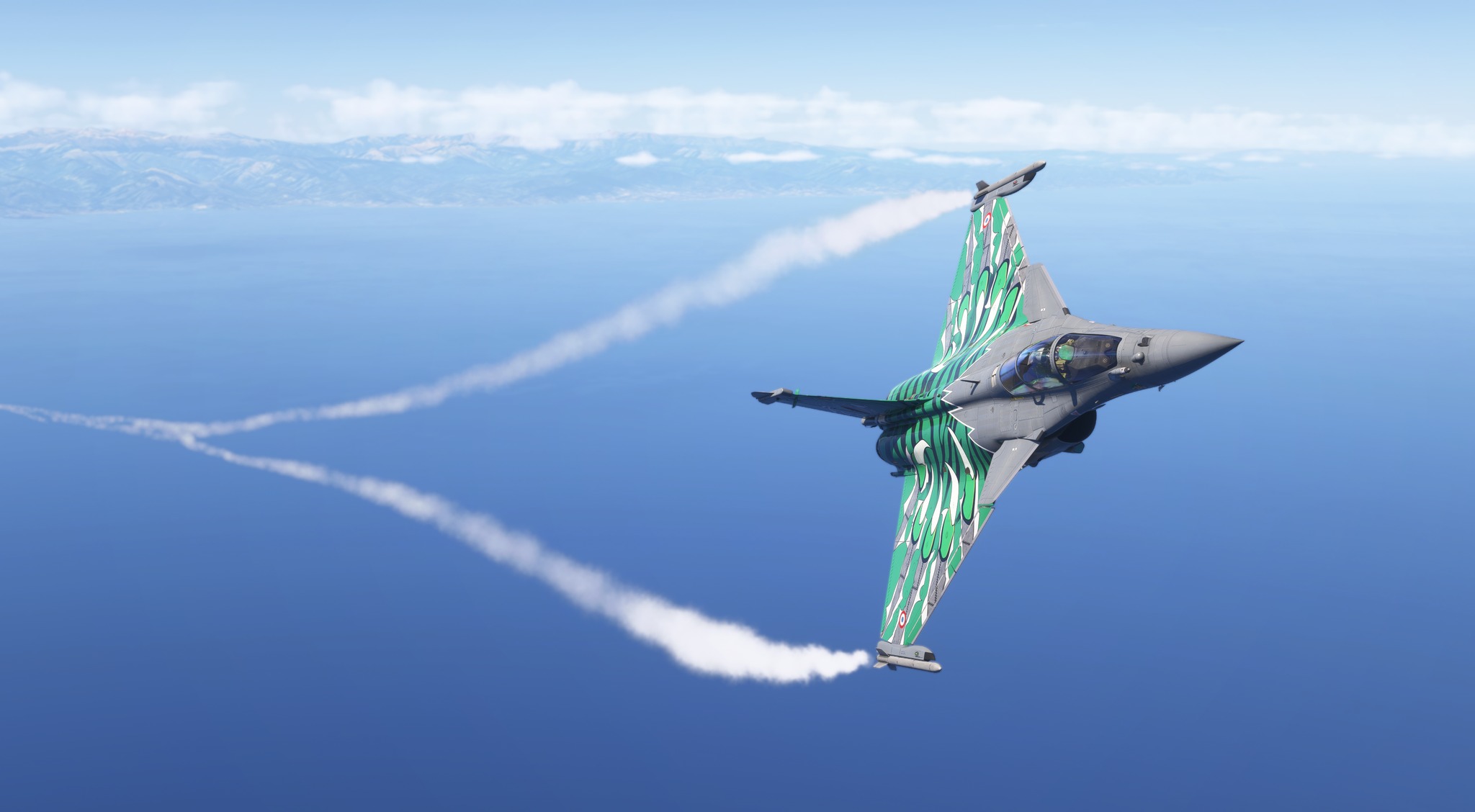
Azurpoly released new screenshots and a development update about its Dassault Rafale.
You can read what we learned below.
“Spring marks the return of airshow season across Europe, and with it, the unmistakable presence of the Rafale Solo Display. If you are lucky enough to see it live, it is always a highlight. If not, you will soon be able to enjoy your own aerobatic sessions at home with our aircraft.
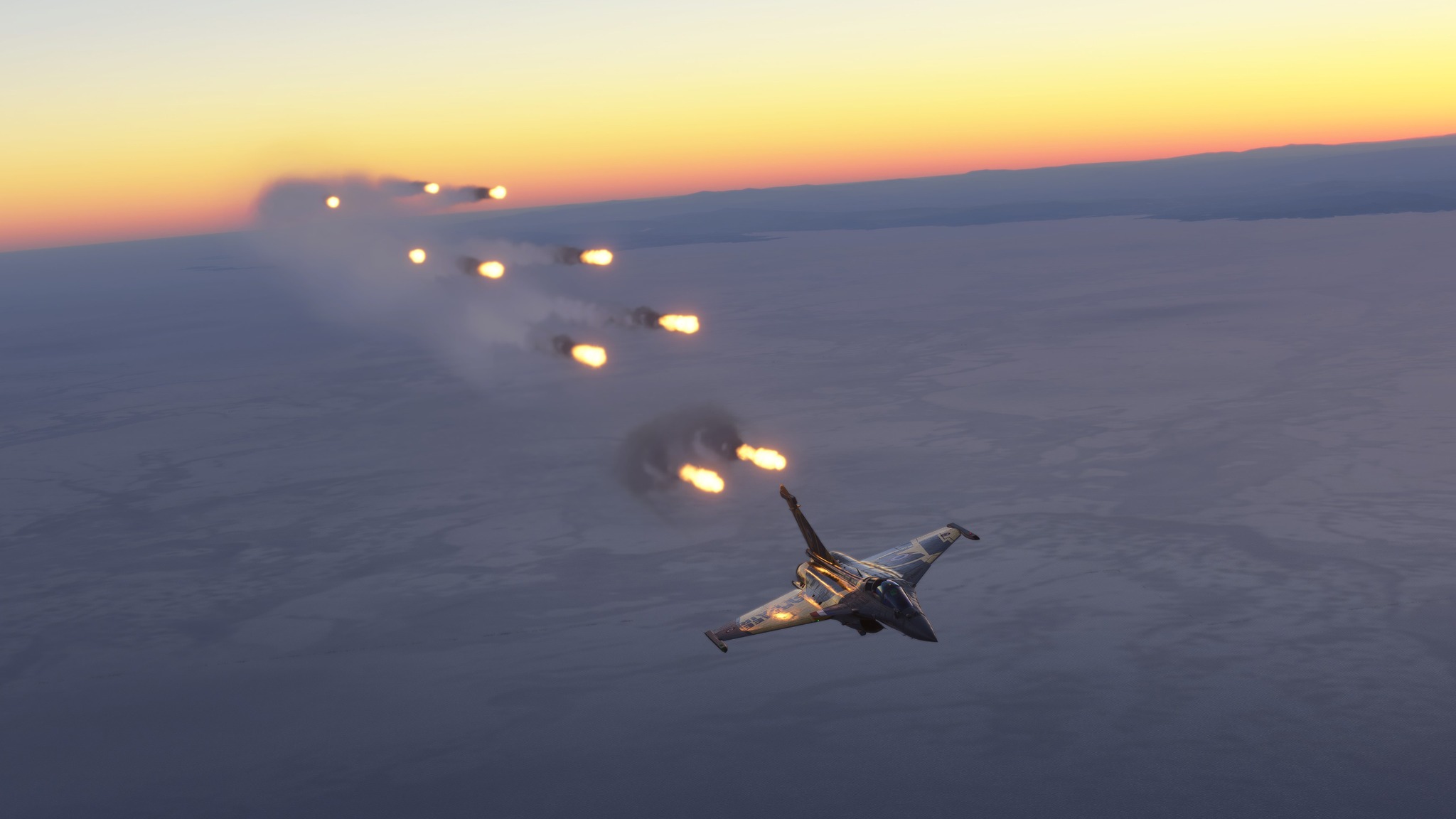
As development progresses, we continue to expand the experience. Wingtip smoke pods have been added, featuring a fully custom 3D effect designed to produce dense and persistent trails. Alongside this, the flares system is now alive. Rather than relying on a simple visual effect, each flare is simulated as an individual object with its own physics and lifecycle, resulting in a much more realistic rendering. We can also easily create various flare deployment scenarios by adjusting the number of flares and their release timing.
The flight model remains one of the most demanding aspects of the project. Working within the constraints of MSFS, especially when it comes to fly-by-wire, has confirmed that implementing a fully custom WASM flight control system was the right decision. It is now nearing completion, and we are very proud of what has been achieved. With the valuable input of real pilots, we are fine-tuning it across all flight domains, speeds, and altitudes to get as close to reality as possible.
Another key challenge is ensuring consistent behavior across all platforms and control setups, from high-end PCs to Xbox, while accommodating the wide range of input devices used by simmers.
Aircraft performance is also reaching a high level of fidelity. The drag and weight of each external store are carefully simulated to ensure consistent behavior across all mission profiles. As you may know, the Rafale can carry up to 1.5 times its own weight in fuel and stores, making this aspect essential to achieve realistic results with every possible loadout.
In parallel, work on avionics, a significant part of the project, continues steadily. More information will be revealed soon.
These screenshots highlight what we have described above and showcase some of the additional liveries among the many that have been created for our product.”
Cessna Citation Sovereign+ for Microsoft Flight Simulator 2020 and MSFS 2024 Gets Plenty of Details

Plenty of details about the upcoming Cessna Citation 680 Sovereign+ have been shared by Skyward Simulations via listing on Orbx Direct, although it still isn’t available for purchase.
Here’s what we learned.
Model
The aircraft has been modeled with attention to both visual fidelity and functional interaction. The goal was not just to recreate the appearance of the Sovereign+, but to ensure that the aircraft feels alive and responsive in all operational contexts.
- Highly detailed exterior and interior models with accurate proportions and refined geometry
- Interactive cockpit and cabin elements, including functional panels, switches, and system interfaces
- Refined lighting system throughout the interior and exterior
- Dynamic and static registration support
- Optimized textures and level-of-detail management for consistent performance
- Optional ground equipment and environmental elements to enhance immersion
All the walkaround elements native to 2024 are ported to the 2020 version and can be toggled via the EFB or directly with the moved cockpit camera.
Cockpit
The cockpit has been designed as a fully interactive environment where functionality takes priority over simply visual representation. Almost every control is integrated into the simulation and tied directly to system logic in some way.
- Fully interactive flight deck with numerous functional switches, knobs, and controls
- Garmin G5000 avionics suite with custom PFD, MFD, and GTC plugins
- System synoptics for electrical, fuel, and hydraulic systems
- CAS messages are driven by a data bus architecture that relies on inputs from other systems and their respective electrical power states
Electrical System
The simulated electrical system is among the most advanced ever seen in Microsoft Flight Simulator, simulating many components, even down to the PCB level of many systems.
- High-fidelity architecture of close to 60 buses, 60 relays, transformers, 600 circuits, 100 diodes, and more
- Numerous simulated printed circuit boards based on the real board logic documentation, processing inputs and outputs across many systems
- Two 28V transformer rectifier units, which are used in tandem with the left and right alternators to power the aircraft in the event of generator failure
- Two 24V 44Ah nickel-cadmium main batteries with hot buses included
- One 24V 1.17Ah nickel-cadmium standby battery to power the standby instrument
- Four 24V 1.17Ah nickel-cadmium emergency batteries to power emergency lighting around the airplane
- One 28.5V ground power unit to assist in electric engine-starts if required
- Two permanent-magnet alternators to power the dual-channel FADEC if all remaining electrical power is lost
- Two 28V DC engine-driven generators capable of delivering 100 amps of load throughout the airplane
FADEC and Engine Systems
The FADEC system dynamically controls engine behavior rather than using fixed values.
- Accurate thrust modes, including TO, MCT, CRU, T/R, and APR
- Two dual-based FADEC channels to command and monitor engines, which rely on their power state and sensor inputs from other data modules, such as the weight-on-wheels and bleed air control logic board
- Accurate calculations of takeoff, climb, and cruise thrust limits with anti-ice off and on
- Accurate modeling of N1, N2, ITT, and fuel flow relationships in many parts of the flight envelope, especially during climb, cruise, and descent
Flight Model
The flight model has been refined to reflect real-world performance trends across the entire envelope.
- Tuned lift and drag coefficients for accurate climb time and fuel, cruise, and descent phases of flight
Hydraulic and Fuel Systems
- Hydraulic system governing braking, landing gear, speedbrakes, spoilers, wheel brakes, thrust reversers, nose wheel steering
- Accurate parking brake operation with the capability to toggle between realistic and unrealistic modes
- Fuel system with crossfeed capability, boost pump logic, and accurate tank modeling
Bleed Air, Anti-Ice, and Environmental Systems
The pneumatic system connects multiple subsystems and plays a central operational role.
- Detailed line and valve architecture accounting for valve power state, PCB behavior, and more
- Engine and APU bleed sources with automatic selection logic based on bleed air control logic boards built to OEM specification
- Integration with cabin pressurization and environmental control systems
- Anti-ice system covering wings, engines, stabilizer, and windshield
The anti-ice system also includes temperature monitoring, rate-based valve actuations, and state-dependent behavior influenced by aircraft conditions and other system-based data. Electrically controlled valves respond to both pilot input and actual system state, with CAS logic reflecting discrepancies when they occur.
Landing Gear and Emergency Systems
Landing gear behavior reflects both normal and abnormal operations and integrates well with board logic and the hydraulic system.
- Hydraulically driven extension and retraction
- Gravity-assisted deployment when hydraulic pressure is lost
- Pneumatic blowdown system for emergency extension
- Mechanical uplock release mechanisms via cockpit and cabin interaction
- Aerodynamic influence on gear behavior during abnormal scenarios
- Nitrogen emergency brake simulation
Avionics and Datalink
The avionics suite integrates directly with aircraft systems and external communication.
- Garmin G5000 avionics with full system integration
- Platform-agnostic ACARS and CPDLC functionality (PC only)
- D-ATIS support for FAA and VATSIM
- Text NOTAMs support with active simBrief flight plan
Crew Alerting System (CAS)
The CAS system reflects actual aircraft logic and system state.
- Advisory, caution, and warning messages are generated based on an accurate data bus structure and other system modules’ outputs
- Takeoff, landing, engine shutdown, and bus fail inhibit states
Electronic Flight Bag (EFB)
The EFB provides a centralized interface for aircraft management and flight preparation.
- SimBrief integration for flight plans, fuel, and weather
- Weight and balance configuration with payload management
- Ground services and aircraft state control
- System pages, including electrical, oxygen, and configuration
- Navigraph charts and flight planning tools
- Over 300 checklists, including abnormal and emergency procedures referenced from the real Airplane Flight Manual
Sounds
Sound implementation complements the system depth and operational realism. The sounds are recorded from the real airplane and put together into the simulation by Boris Audioworks.
- Custom sounds for all aircraft-related systems with close attention to detail
- Sound effects for all interactive elements in and outside the airplane
- Volume controls for exterior and walk-around volumes
Platform Support
The aircraft is available as separate native versions for:
- Microsoft Flight Simulator 2020
- Microsoft Flight Simulator 2024
The new, highly accurate electrical architecture is only available in Microsoft Flight Simulator 2024 as it relies on improvements and capabilities only found in the new electrical simulation. The 2020 version features a sligtly modified but still highly accurate representation of the real electrical system.
Key Features
- Expertly Vetted: Developed using real-world references and tested by a group of six CE-680 pilots and technicians, along with over a dozen additional jet pilots.
- High-Fidelity Flight Model: Tuned lift and drag coefficients for accurate climb, cruise, and descent performance.
- Dual-Platform Support: Native versions available for both MSFS 2020 and MSFS 2024.
- Garmin G5000 Suite: Fully custom PFD, MFD, and GTC plugins with integrated system synoptics.
- Advanced Electrical Architecture: Simulates nearly 60 buses, 600 circuits, and PCB-level logic (most advanced features exclusive to MSFS 2024).
- Deep FADEC Simulation: Dual-channel FADEC commanding accurate thrust modes (TO, MCT, CRU, T/R, APR) and realistic engine relationships (N1/N2/ITT).
- Complex Logistics: High-fidelity modeling of hydraulic, fuel (crossfeed/boost pumps), and bleed air systems built to OEM specifications.
- Logic-Driven CAS: Crew Alerting System messages driven by real-time data bus architecture and electrical states.
- Premium Visuals: Highly detailed exterior/interior models with interactive panels, switches, and refined lighting.
- Walkaround Elements: Native 2024 walkaround features ported to the 2020 version.
- Landing Gear Physics: Includes hydraulic extension, gravity-assisted deployment, and a pneumatic blowdown system for emergencies.
- Pro-Grade Datalink: Features platform-agnostic CPDLC and ACARS (PC only), D-ATIS, and Text NOTAMs.
- Comprehensive EFB: Includes SimBrief/Navigraph integration, weight and balance management, and over 300 real-world checklists.
- Authentic Soundscape: Systems and environmental sounds recorded from the actual aircraft by Boris Audioworks.
- Interactive Foley: Custom sound effects for every switch, knob, and interactive element.
Airbus AS365 Dauphin “Coming Soon;” New Teaser Released
Taog’s Hangar revealed a new teaser trailer of the Airbus AS365 Dauphin helicopter.
According to the developer, the aircraft is “coming soon.”
If you’d like to read more flight simulation news, you can find plenty in our previous roundup article from yesterday.
If you want to go further back, we have a handy overview video of the major flight simulation news in the past week. You can watch it below. As usual, leaving a like and a comment and subscribing to our growing YouTube channel is extremely helpful.
While Simulation Daily is owned and financed by Orbx Simulation Systems, its staff is afforded full editorial independence and will strive to cover products from all companies and developers impartially. Check out our editorial policy.