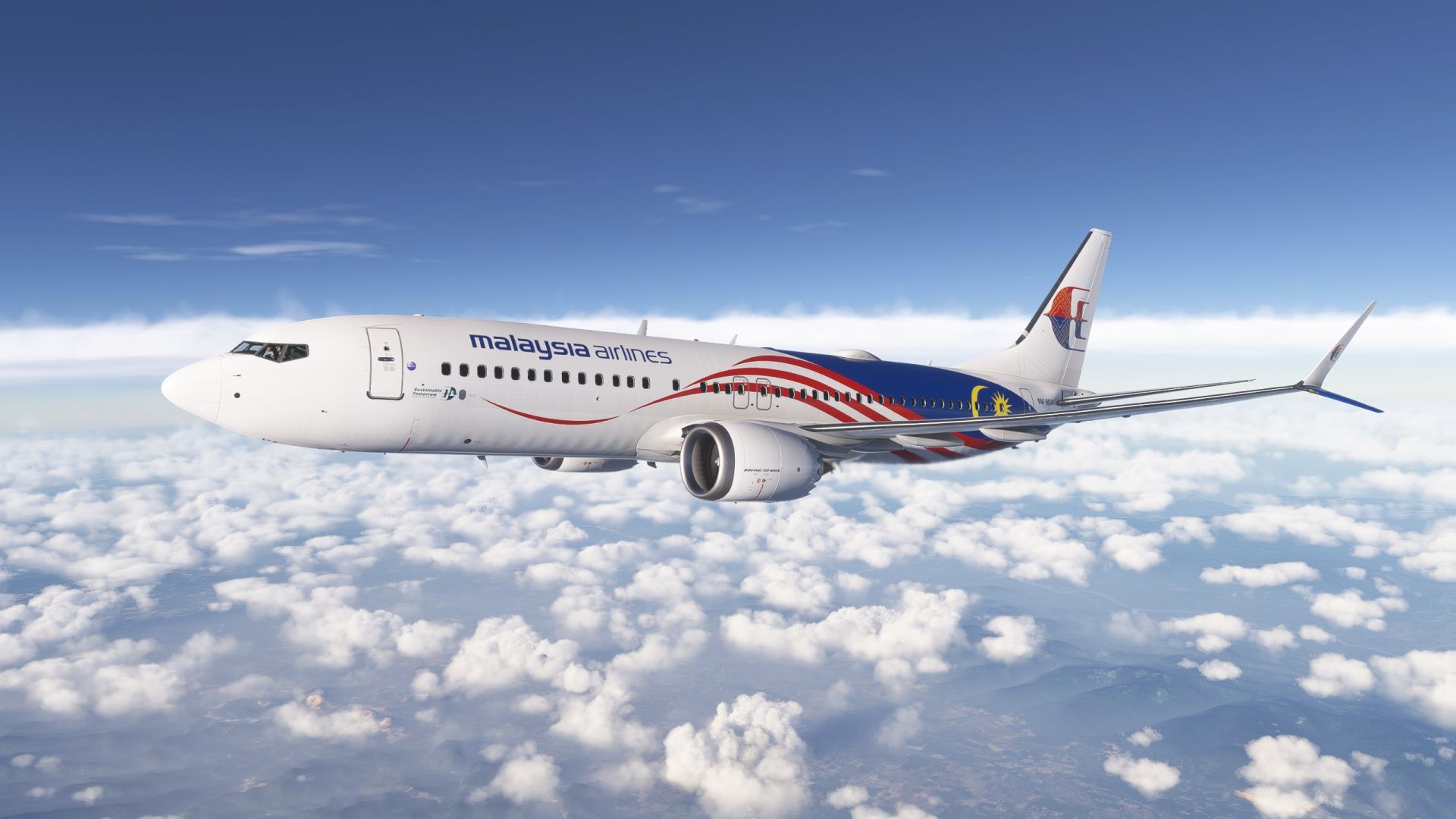
Today, PMDG announced a release date and plenty of interesting details about its upcoming Boeing 737-800 for Microsoft Flight Simulator 2024.
The aircraft, which is a highly enhanced remake of a popular airliner for Microrost Flight Simulator 2020, is targeting a release on December 18. 2025, at some time after 17:00 Zulu Time.
As usual, this is related to the PC version on the developer’s own store.
While there are still some small outstanding issues on the exterior of the aircraft, PMDG has decided that these will be fixed with updates, in order to launch the aircraft before the Christmas holidays and let fans finally enjoy it.
CEO Robert Randazzo cautions that the timing may change slightly, but he doubts that it will.
We also learn that the737-600 and -900 will release in January, while the -700 is expected in February. This is a little later compared to previous information shared by Randazzo, but the only constant in game development is change.
The price has not been finalized yet, but it’s expected to be in line with previous PMDG products. The promise of a “substantial discount” for those who purchased the aircraft for MSFS 2020 remains unchanged, although we don’t yet know the specifics.
What we do get specifics for is the features we can expect, or at least one-third of them, as this is marked as episode one of three.
Air Conditioning System
- The forward cabin zone temperature will change if the forward doors are open and the outside air temperature (OAT) differs significantly from the cabin temperature.
- Cabin temperature will stabilize based on the air volume supplied by the environmental control system, the ambient temperature, and any solar heating the aircraft experiences.
- If ground air conditioning or heating is selected from the GROUND CONNECTIONS menu, conditioned air is supplied to the cabin via the air-mix manifold, just as in the real aircraft.
- Cabin air conditioning follows the scheduled temperature-management logic, heating or cooling the cabin according to the flight phase to support passenger physiological comfort.
- Both automatic and manual temperature-control modes are fully modeled.
Anti-Ice
- During ground operations in hot environments, you may notice the window heaters cycling on and off to maintain the target window-heat temperature. You may also observe times when no heat is required to maintain the correct surface temperature. In such cases, the WINDOW HEAT TEST switch provides a confidence check to ensure the heaters are functioning correctly.
- An engine anti-ice OVERPRESSURE warning indicates that pressure inside the engine’s ring cowl is too high. Follow the QRH to resolve the issue and visually inspect the engine. The high-pressure blowout duct will be visible, allowing excess pressure to vent to the atmosphere.
Avionics & Flight Deck
- Modern airliners are highly complex machines, and we have worked hard to ensure the airplane responds realistically to crew inputs. Systems take time to react to switches and knob changes, and indicator lights likewise require a moment to reflect new system states. This behavior is a hallmark of the simulation depth in the PMDG 737.
- Due to the many sensors and potential messages, Boeing incorporates extensive suppressive logic to prevent nuisance or transient alerts. Many systems include intentional delays—1, 2, 3, 5, 10, 12, 15, 30, or 60 seconds—to allow parameters to stabilize before an alert is shown. As a result, you may see a light within a system switch illuminate before a corresponding advisory appears on the displays. This is correctly modeled behavior and reflects the underlying Boeing logic implemented in PMDG aircraft.
- PMDG has modeled IRS drift since their earliest FS9-era products. Alignment-time variation due to latitude is also included; the closer you are to the poles, the longer alignment will take.
- InHG/HPA selection is set automatically based on geographical region. For example, when starting in the United States, Canada, or Japan, the system will auto-select InHG.
Auto-Flight System
- The Speed Trim System (STS) is fully simulated and will automatically trim the aircraft after takeoff if the airspeed exceeds the MCP-commanded speed.
- If the IRS transfer switch is not in the center position, no autopilot can be engaged, although the flight director will function for basic lateral and vertical modes. The AFS relies heavily on the ADIRU (with the IRS at its core) to provide pitch, yaw, and roll data. Two autopilots and two flight directors are modeled.
- The on-side IRS supplies pitch and heading data, while the off-side IRS provides roll and bank data. If neither IRS is at least in ATT mode, the autopilot in CMD will disconnect and cannot re-engage, regardless of the IRS XFER switch. Track-based lateral modes (LNAV and VOR/LOC) require the on-side IRS to be in NAV; if a mode is selected without it, or if an IRS fails, the autopilot will revert to the base mode (CWS_L).
- The AFS requires uninterrupted electrical power from the on-side DC bus and AC transfer bus. Loss of AC power for more than 0.5 seconds causes the autopilot to disconnect within 40 ms. If AC power is lost for more than 7 seconds, the flight director ceases to operate as well. AP/FD cannot be re-engaged until power is restored. If the on-side AC transfer bus changes source due to a failure but remains powered, the autopilot will disconnect only temporarily and can be re-engaged.
- When you press a CMD or CWS button, the autopilot engages only after a brief delay required to pressurize the FCC hydraulic actuators. If switching CMD sides (e.g., CMD A to CMD B), the new side engages with a slightly longer delay to allow depressurization of the previous side and pressurization of the new one.
- Near the low-speed buffet boundary and into an impending stall, the aircraft will apply multiple recovery actions: increasing thrust (if AT is active), selecting LVL CHG (when appropriate), flashing the MCP speed window, trimming nose-down automatically, extending slats, and finally activating the elevator feel shift module (EFSM) in manual flight to increase aft-column force.
- The autothrottle system requires:
- DC Bus 1 or DC Bus 2 powered;
- thrust difference between engines < 2000 lbs;
- at least one IRS in NAV when in SPD mode;
- the stall-management/yaw-damper system powered;
- reversers locked.
- If any of these conditions are not met, the AT disconnects. During autoland, the AT drives the throttles to IDLE when RA < 24 ft. When not in autoland, the AT drives to IDLE with flaps ≥ 15° and RA < 27 ft. After landing, the AT disconnects after 2 seconds.
- The VOR roll mode includes four sub-modes: arming, capturing, on-course, and over-station (OSS). VOR capture requires a beam deviation of less than 22°, and at least 3 seconds since the last OBS change. Capture occurs instantly when within 0.5° of the deviation, for at least 10 seconds within 2 °, or when the FCC calculates the appropriate capture point. OSS mode is triggered by beam divergence rate, and—when DME is co-located—by a combination of altitude and distance. OSS mode can last up to 23 seconds and ensures stable crossing or turning within the VOR “confusion zone.”
- If the autopilot is engaged in CMD mode, applying excessive force to the controls can shear the real-world 110-lb force rivet and damage the on-side FCC. That autopilot cannot be re-engaged.
- With Realistic Autopilot Engagement enabled, the autopilot will not engage in CMD unless the aircraft is in trim, control deflection is minimal, the attitude is within acceptable margins relative to the flight director commands, and the electric trim switch is not being pressed.
- TOGA requires both flight directors to be ON. TOGA will also engage if both flight directors are OFF, IAS > 80 kt, altitude < 2000 ft, and within 150 seconds after liftoff.
- The key requirement is BOTH.
- The autopilot/flight-director system is highly precise but not perfect. Minor deviations from commanded track, course, or speed are normal and reflect real-aircraft behavior as the system manages aircraft energy and protects control-law limits (e.g., during level-off or turn capture). This is intentional and accurately modeled.
- MCP mode selections may exhibit a short delay before engaging, allowing internal system checks to complete.
Brakes and Gear
- The 737-style gear lever with the OFF setting is fully simulated, and the Gear Override trigger is functional.
- Brakes are subject to brake-temperature soak. After heavy use, brake temperature will continue to rise for a period.
- Hot brake disks provide the best braking performance; hot brakes are not ineffective.
- The anti-skid system is active in all braking modes and mitigates touchdown skids and hydroplaning. Each wheel is monitored and controlled independently, and the entire system—from wheel-speed sensing to valve logic—is modeled.
- Brake accumulator pressure can be monitored using the gauge below the main displays and on the landing-gear synoptic.
- The 737 braking system is designed to manage landing deceleration, but taxi acceleration is far lower.
- Autobrake deceleration rates:
- Autobrake 2: 5.0 ft/sec², max 1600 psi
- Autobrake 3: 6.0 ft/sec², max 1850 psi
- Autobrake 4: 7.5 ft/sec², max 2150 psi
- MAX AUTO: 11.0 ft/sec², max 3100 psi
All settings except RTO include a 0.1-second delay after ground-signal detection. All of this is fully modeled.
Cabin
- The Boeing Sky Interior, including integrated lighting and curved architectural elements, is modeled.
- The Boeing Sky Lighting System (including the flight-attendant control panel) is fully modeled, with zone control and independent settings for the forward and aft entry areas. You can select the correct lighting scenes for all phases of flight:
- Boarding / Deplaning
- Takeoff / Landing
- Cruise
- Night / Rest
- Meal / Beverage
- Sunset / Sunrise
- White Bright
- White Medium
- Work



Incidentally, news about the highly anticipated sound update for the Boeing 777 line sould come in January.
Microsoft Flight Simulator 2024 is currently available for PC, Xbox Series X|S, and PS5. If you’d like to hear more about the simulator, you can watch our latest interview with Head of Microsoft Flight Simulator Jorg Neumann.
Microsoft Flight Simulator 2020 is available only for PC and Xbox.
If you’d like to read more flight simulation news, you can find plenty in our latest roundup article from yesterday.
If you want to go further back, we have a handy overview video of the major flight simulation news in the past week. You can watch it below. As usual, leaving a like and a comment and subscribing to our growing YouTube channel is extremely helpful.