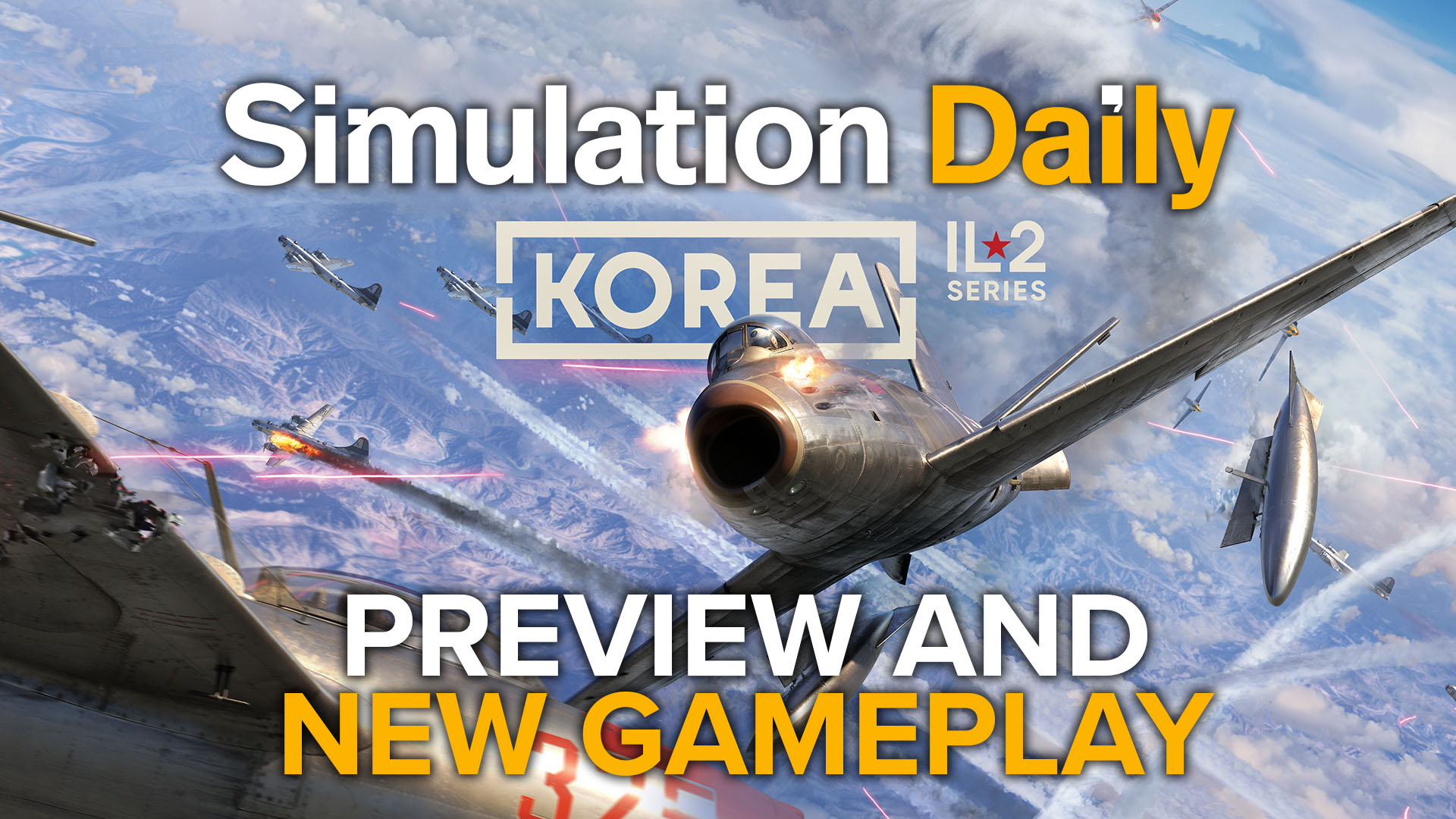
The Korean War was a pivotal moment in history, but it’s also one of the most underrepresented conflicts in video games. Soon, a new combat flight simulator, Korea: IL-2 Series, will place it under the spotlight.
The Korean War was fought between 1950 and 1953, and despite its relative obscurity, it’s the perfect setting for aviation enthusiasts to witness the end of the propeller era and the outset of the jet era.
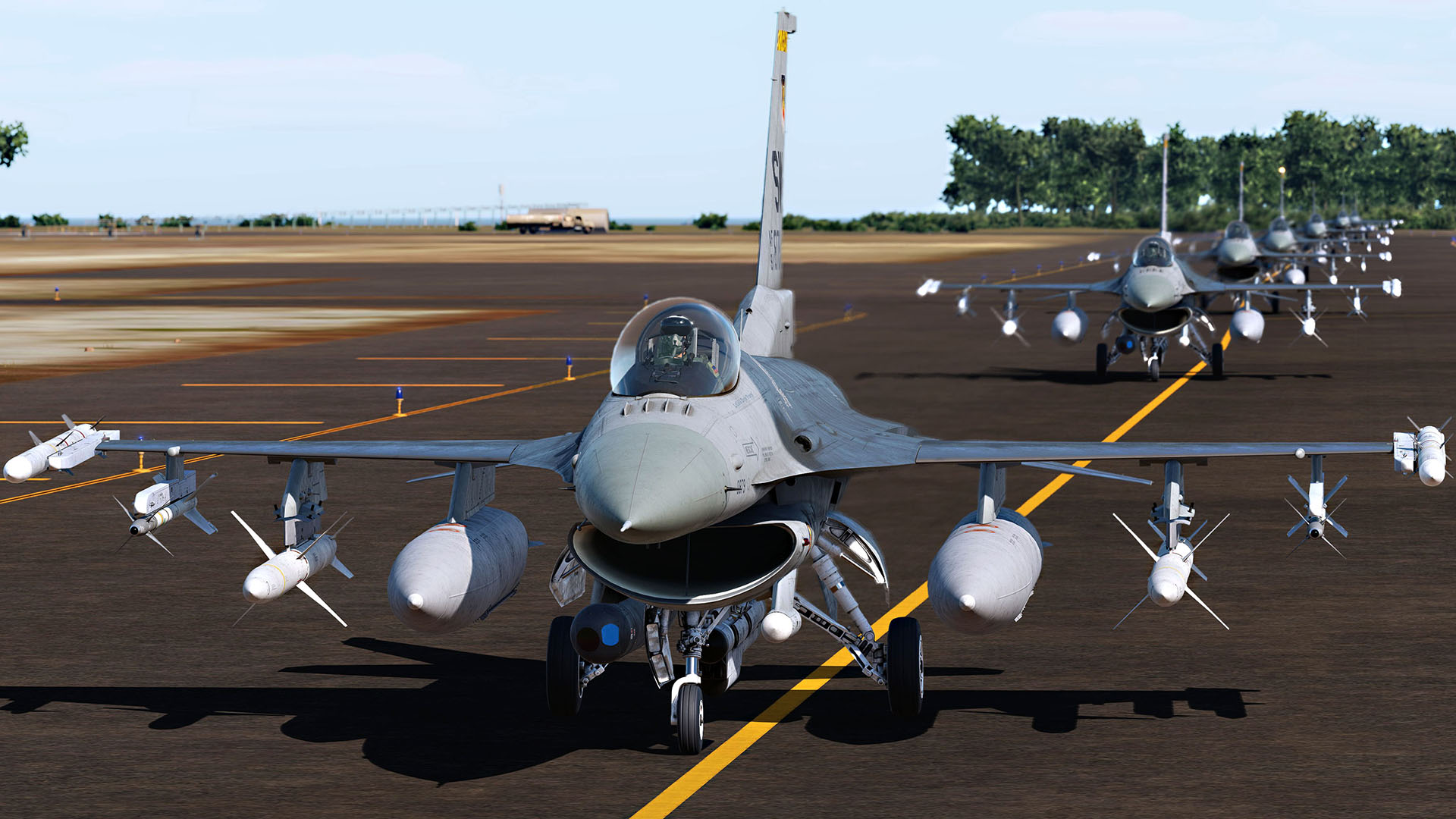
The new simulator by 1C Game Studios includes both aspects, letting you fly late piston fighters like the F-51D Mustang and Lavochkin La-11 all the way to the real protagonists of the conflict in the sky, the F-86A Sabre and the MiG-15bis.
Specifically, 8 aircraft will be included at launch, and the developers promise that they will be “in many ways even more detailed” and “more historically accurate” compared to a “so-called free to play project.” I’m pretty sure we all know who they’re talking about. We also hear that they feature “high-quality aerodynamics validated by real pilots.”
The folks at 1C actually don’t shy away from the comparison, especially considering that the current preorder price of the standard edition of Korea: IL-2 Series is $80 and is expected to grow closer to release.
They mention that while in the competing project, you may have to pay the same amount for a single aircraft, in Korea: IL-2 Series, you get eight detailed planes, plus the “huge map recreated manually from historical data” that took “years studying historical sources” with every settlement, airfield, and structure represented as it existed in 1950.
While we’ll have to see whether these claims will be fully realized when the simulator launches, the comparison is pretty compelling, assuming that the promises are kept.
If you’re wondering, the developer is no newcomer to flight simulation. The IL-2 series debuted all the way back in 2001 with IL-2 Sturmovik, set on the Eastern Front of World War II.
At that time, it was very innovative among combat flight simulators and provided a lot of interesting features in a genre that was still at the cutting edge of AAA technology despite its relatively niche nature. It also included a rather advanced multiplayer suite for the time, and I personally spent many hundreds of very enjoyable hours in it.
The series evolved greatly over time, and the IL-2 Sturmovik: Great Battles sub-series is still actively supported today.
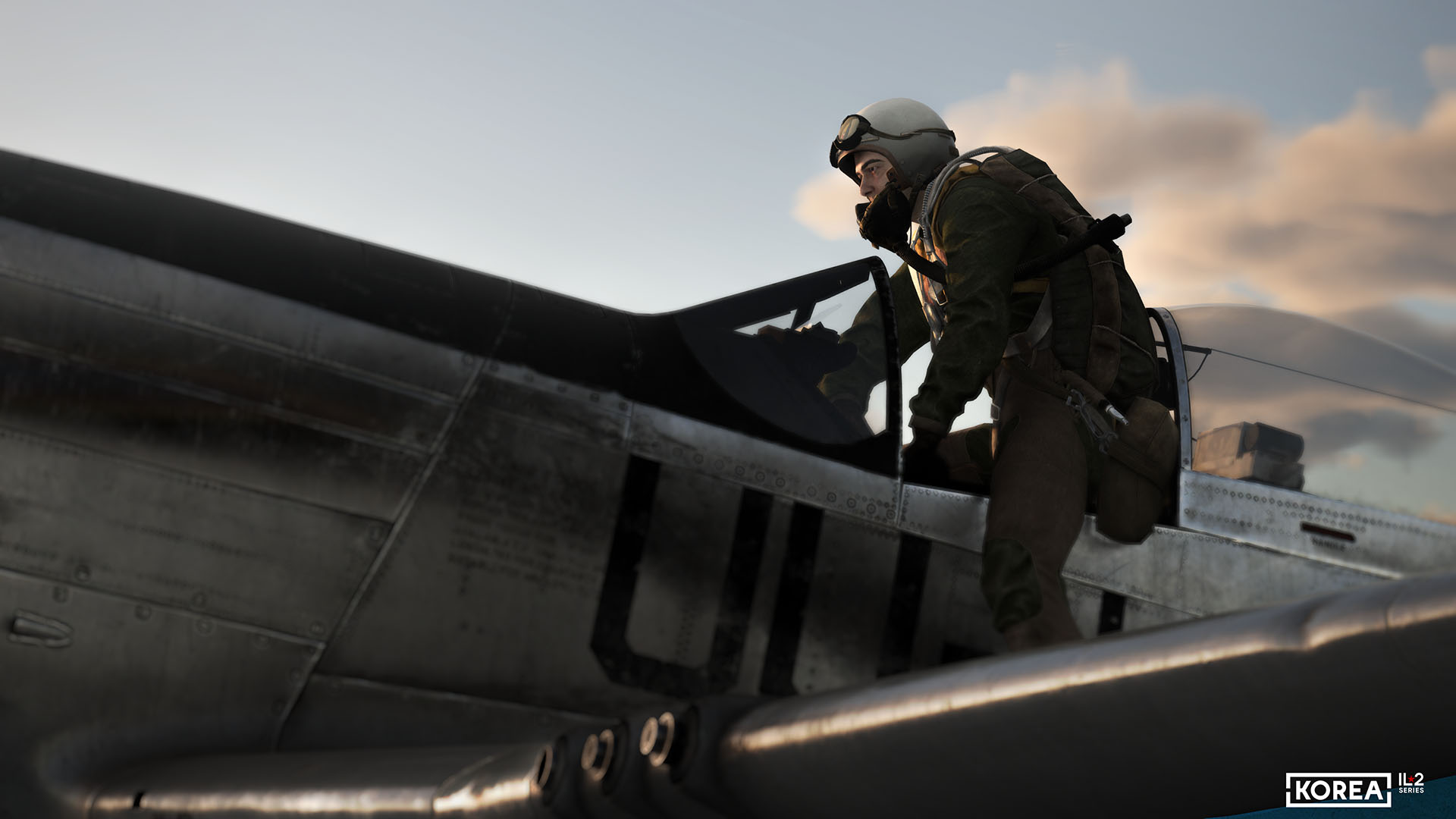
Considering the series’ historical role in hardcore combat flight simulation, I tend to take what we’ve seen and heard about Korea: IL-2 series, including the new gameplay that you can see above (and that we saw a few days ago in a behind-closed-doors presentation), rather seriously.
One of the things that makes Korea: IL-2 series extremely interesting is that, while you’re flying jets that start to get close to the performance of modern incarnations, weapons have not evolved to the next generation yet.
This means that there are no missiles; you’re still fighting with guns, cannons, and dumb bombs. Combined with the speed of engagement, this means that the skill floor required to master a Sabre or a MiG-15 in combat is quite high.
Speaking of the competing “so-called free to play” simulator mentioned above, many of its enthusiasts enjoy “guns only” fighting, so I expect that crowd to feel right at home in the 50+ missions included here.
Of course, you’re also going to have mixed encounters, so you can enjoy preying on less advanced piston aircraft, or put yourself in the opposite situation, challenging jets on an obsolete plane.
Visually, as you can see in this gameplay footage, the game is rather fetching, using a greatly evolved engine compared to Great Battles. The level of detail displayed is definitely very high, and a rather spectacular highlight is the damage model, which appears to be one of the best I’ve seen in the industry.
According to the developers, and we can certainly see it in the footage, the damage simulation has evolved considerably compared to Great Battles, which was already excellent in this aspect.
We even saw a belly landing, and it’s certainly impressive to see the way the aircraft interacts with the tarmac, the sparks, and even the ability to walk out of the cockpit on your own feet following the emergency landing.
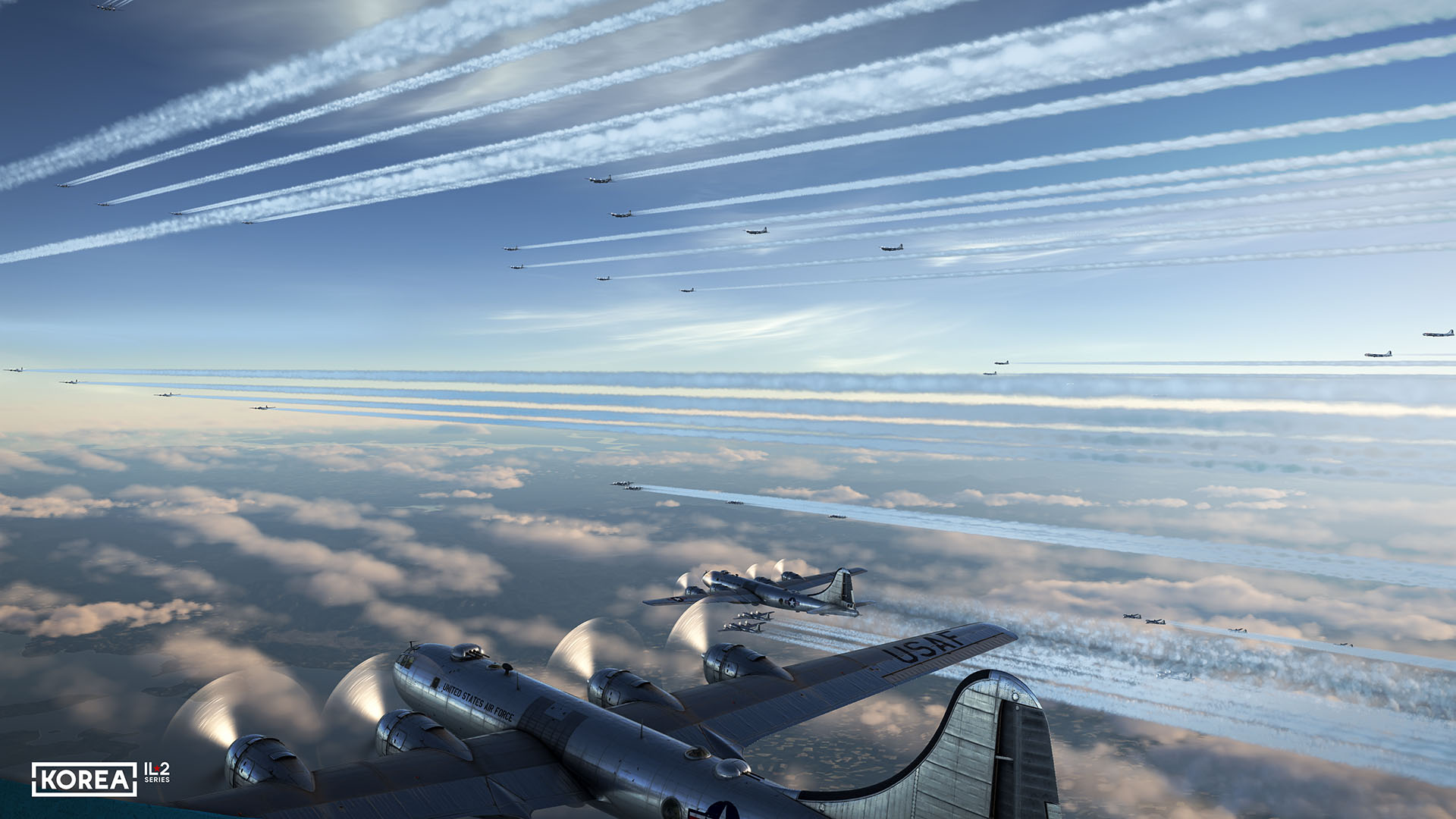
The engine is also capable of displaying an extremely high number of aircraft, alongside their weaponry and contrails, which is conducive to reproducing the massive bomber formations that one would have seen in the skies of Korea in the early 1950s.
While this is a hardcore simulator in every aspect, the developers have made significant efforts to make it accessible. Not only can you find manuals for every aircraft within the sim itself, but you also have full cockpit layouts for reference.
The flight interface is actually one of the highlights of what we’ve seen. While you can control your aircraft normally, operating each lever and switch as it was done in the real world, the new UI lets you perform operations intuitively without even knowing where these switches are in the cockpit.
It’s even possible to fly with a normal console-style controller, although I would personally not recommend it. On the other end of the spectrum, VR is fully supported for those who prefer maximum immersion and have left flat monitors behind.
Aircraft feature complex tire and suspension models, and ground handling is another aspect that feels quite advanced and realistic, which is definitely promising, considering that some simulators still struggle in that aspect.
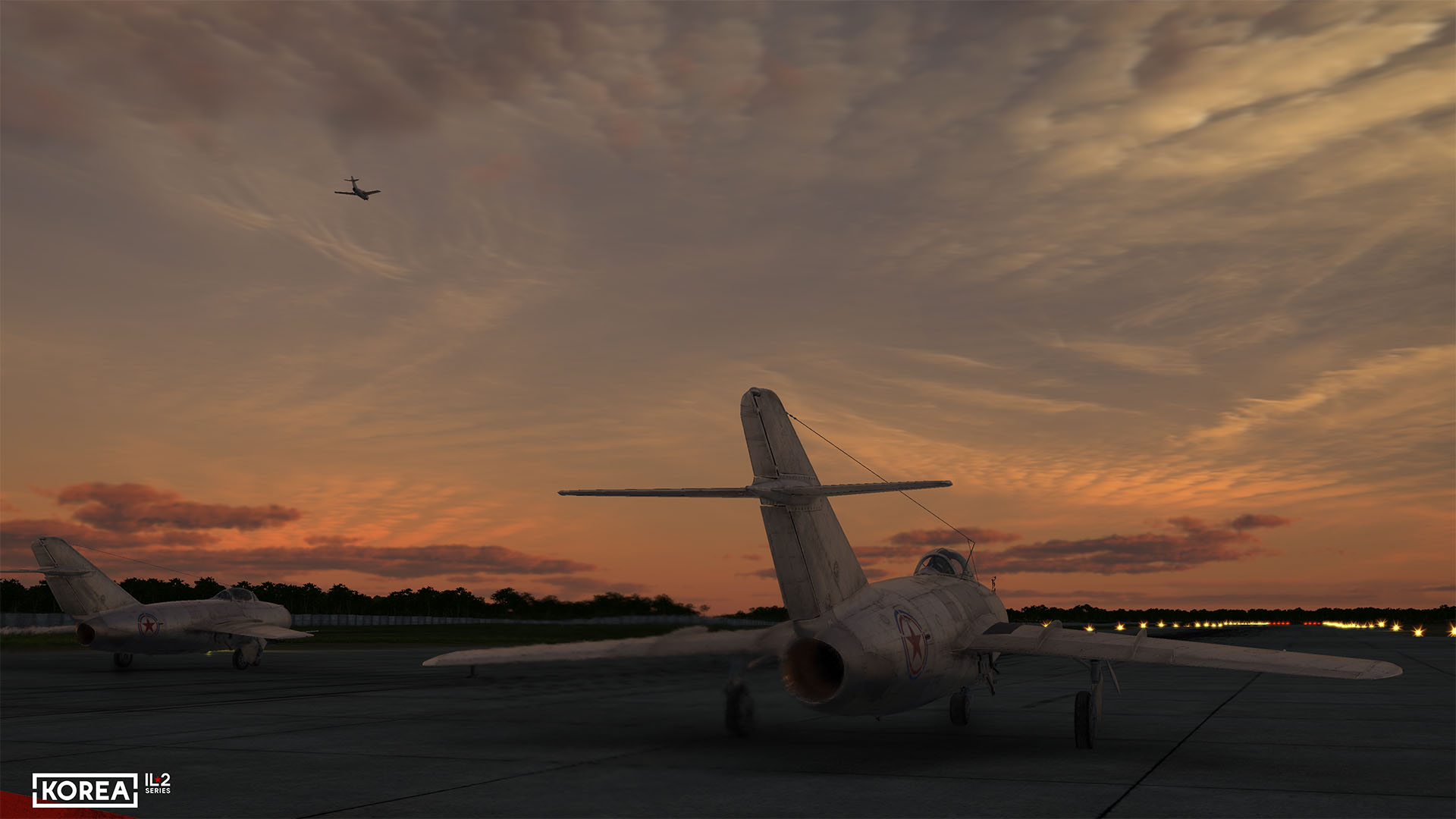
Speaking of the ground, we heard from 1C that AI behavior has been revolutionized, so you’ll see other aircraft taxi correctly and coordinate realistically around you at airfields.
Another relevant element that will likely make Korea more accessible to those who don’t have several hours to fly each mission is the new fast travel feature.
Not everyone can dedicate two hours to flying to the objective of a mission and even more time to return, especially considering that the action on target may be rather fast. While I personally enjoy the trip as much as the destination, I can definitely understand that the long navigation times may be an obstacle to more casual users.
In Korea: IL-2 Series, you’ll be able to skip to the action with a single click. The engine will keep track of fuel consumption and other factors, and you can still be intercepted by hostiles. If that happens, the fast travel will be interrupted, and you’ll have to fight your way through or avoid the threat.
The simulator also comes with extensive features beyond flying and fighting, including a deep customization system that lets you choose your loadouts, paint scheme, emblems, helmets, identification markings, modifications, and more. You can even select the composition of your ammo belts, which is likely the nerdiest thing I’ve seen in this kind of software.
All this goodness is topped by an extensive museum mode, which will let you learn more about the history of the conflict and all the units you’ll encounter, both in the air and on the ground.
Korea: IL-2 Series is releasing this spring, with a release date still pending. It’ll be available on the developer’s own site, and a Steam listing is coming soon.
If you’re wondering whether a console port is possible, the developers would love to do it, but there are hardware limitations they would need to contend with, especially on the memory side. They’re not fully sure that the current generation of consoles can handle this simulator’s quality.
That being said, they have already done some initial testing, which showcased good performance in terms of frames-per-second. Memory consumption remains the biggest obstacle, so no promise can be made on this front.
If you’d like to read more flight simulation news, you can find plenty in our latest roundup article from yesterday.
If you want to go further back, we have a handy overview video of the major flight simulation news in the past week. You can watch it below. As usual, leaving a like and a comment and subscribing to our growing YouTube channel is extremely helpful.